
Velocità, parola, visione · Villa Casati Stampa
Boccioni
Umberto Boccioni, 1882–1916
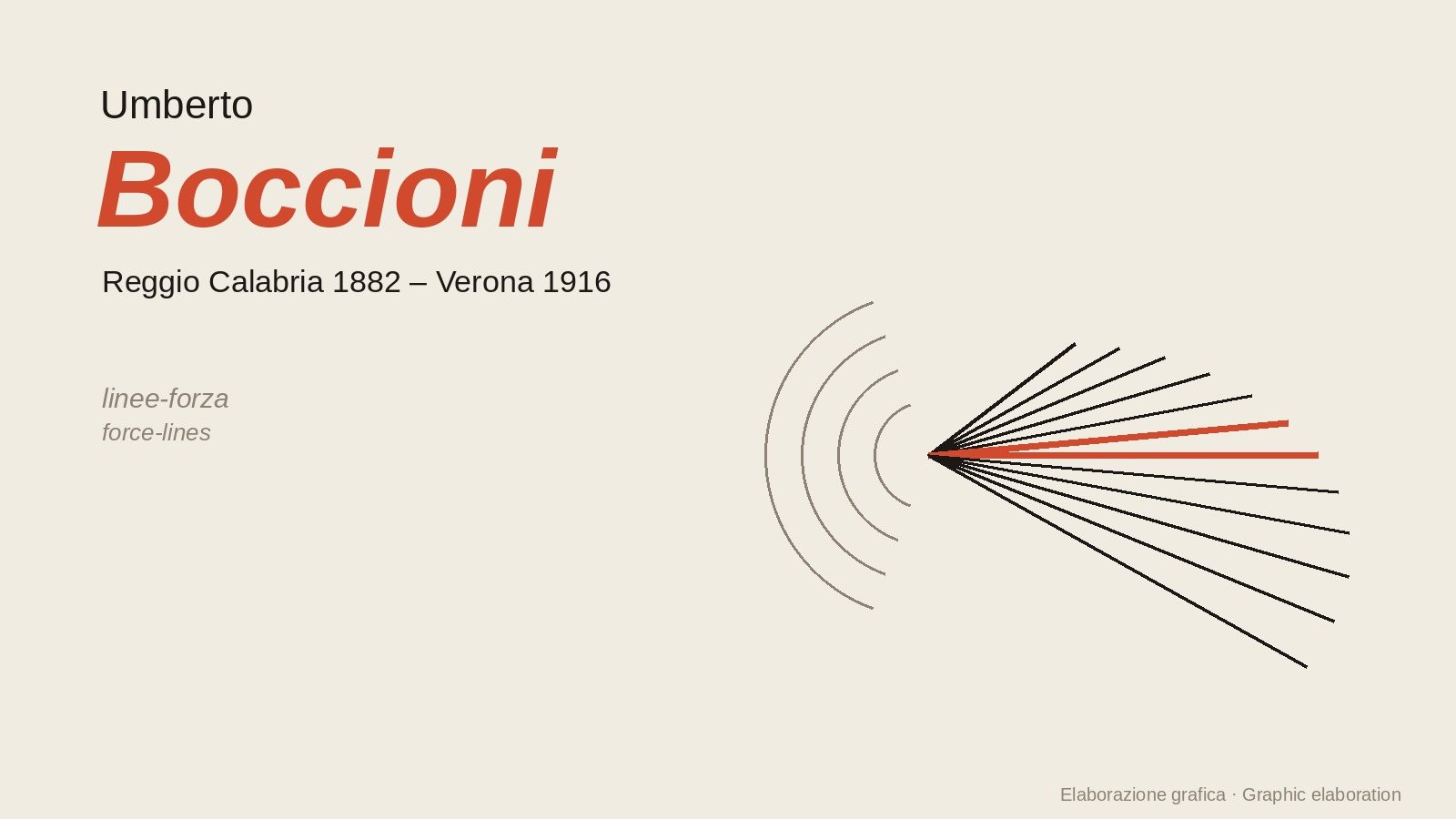
Nel 1910 Umberto Boccioni ha ventisette anni e ha già cambiato molte città. È nato a Reggio Calabria, è cresciuto spostandosi con la famiglia, si è formato a Roma, nello studio di Giacomo Balla, e ha viaggiato fino a Parigi e in Russia. A Milano, dove si stabilisce, cerca ancora la sua strada.
L'incontro con Marinetti gliela indica. Nel giro di poche settimane firma il manifesto dei pittori futuristi e sale sul palco a leggerlo. Da quel momento diventa la mente teorica del gruppo: scrive, discute, spiega che cosa deve essere una pittura del proprio tempo.
Il suo tema è la città moderna e ciò che fa alle persone. Dipinge cantieri, folle, stazioni, ma soprattutto ciò che si prova dentro quello spazio: l'energia, l'ansia, la separazione. Nel 1911 dedica tre quadri alla partenza di un treno, Stati d'animo, oggi tra le opere più note del Futurismo.
Non si ferma alla pittura. Nel 1912 firma il manifesto della scultura futurista e poco dopo realizza Forme uniche della continuità nello spazio, una figura che avanza e sembra fatta d'aria e di velocità insieme. Nel 1914 raccoglie le sue idee in un libro.
La sua carriera dura pochi anni. Nel 1916, a trentatré anni, muore per una caduta da cavallo durante un'esercitazione militare.
Resta la figura che più di ogni altra ha dato al Futurismo una forma visiva: non solo l'elogio della velocità, ma il tentativo di mostrarne l'effetto sugli esseri umani. È l'esperienza che questa sala prova a evocare.
English
In 1910 Umberto Boccioni is twenty-seven and has already changed many cities. Born in Reggio Calabria, he grew up moving with his family, trained in Rome in the studio of Giacomo Balla, and travelled as far as Paris and Russia. In Milan, where he settles, he is still looking for his path.
Meeting Marinetti shows him the way. Within a few weeks he signs the manifesto of the Futurist painters and goes on stage to read it. From then on he becomes the group's theoretical mind: he writes, argues, explains what a painting of its own time should be.
His subject is the modern city and what it does to people. He paints building sites, crowds, stations, but above all what one feels inside those spaces: energy, anxiety, separation. In 1911 he devotes three paintings to the departure of a train, States of Mind, now among the best-known works of Futurism.
He does not stop at painting. In 1912 he signs the manifesto of Futurist sculpture and soon after creates Unique Forms of Continuity in Space, a striding figure that seems made of air and speed at once. In 1914 he gathers his ideas in a book.
His career lasts only a few years. In 1916, aged thirty-three, he dies after falling from a horse during a military exercise.
He remains the figure who, more than any other, gave Futurism a visual form: not just praise of speed, but an attempt to show its effect on human beings. It is the experience this room tries to evoke.