
Velocità, parola, visione · Villa Casati Stampa
Diulgheroff
Nicolay Diulgheroff, grafiche per Cordial Campari, anni Trenta · Graphics for Cordial Campari, 1930s — Elaborazione grafica
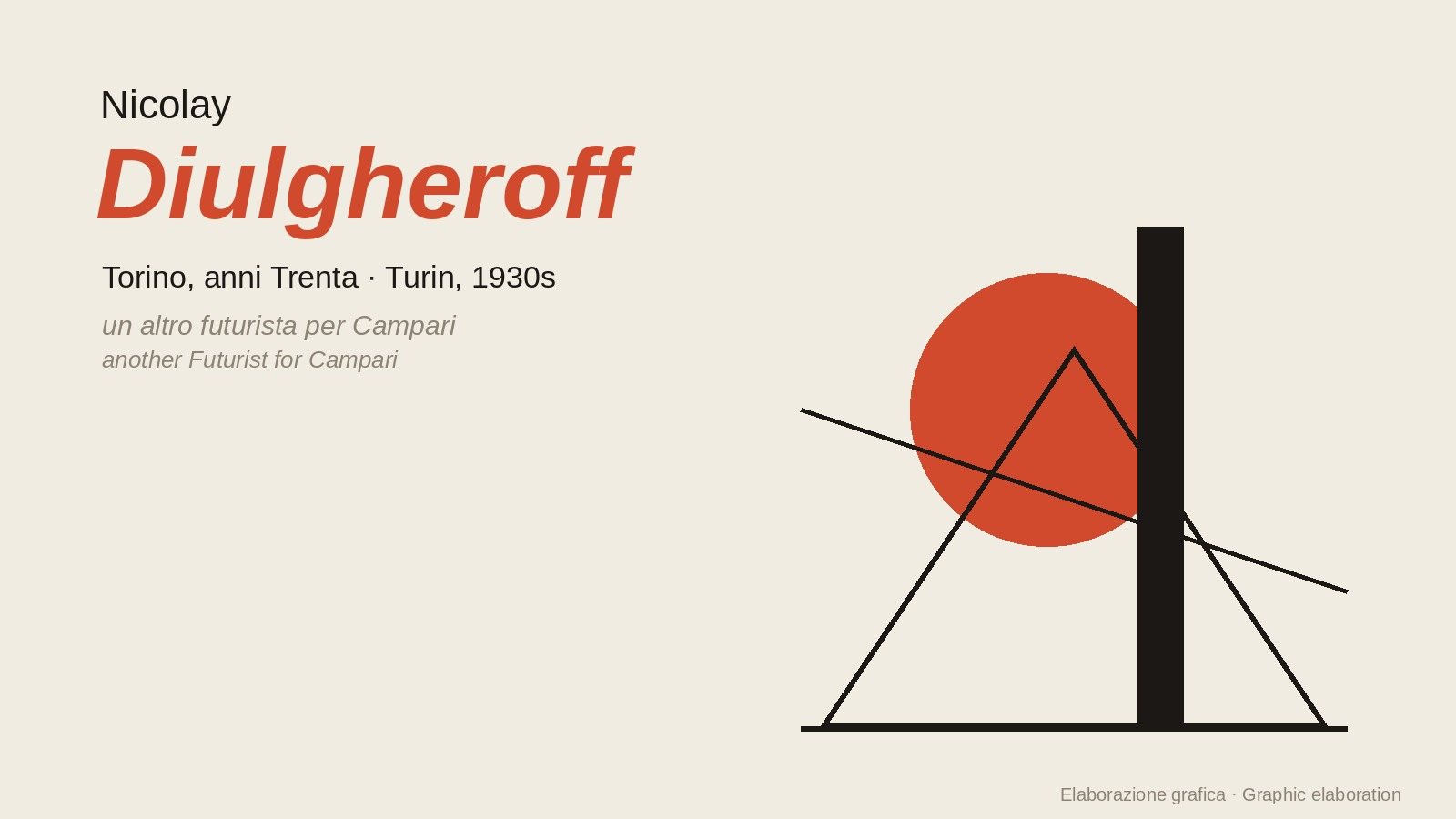
Accanto alle grafiche di Depero, in questa sala ci sono due manifesti di un altro artista, meno conosciuto dal grande pubblico: Nicolay Diulgheroff. La loro presenza ricorda che la collaborazione tra Campari e il Futurismo non passa da un solo nome.
Diulgheroff è nato in Bulgaria nel 1901. Dopo gli studi d'arte in diverse città europee arriva a Torino a metà degli anni Venti, e lì entra nel gruppo futurista della città, diventandone una delle figure di spicco. È pittore, grafico, designer e architetto: anche lui, come Depero, non si ferma a un solo linguaggio.
Siamo nella fase che gli studiosi chiamano secondo Futurismo, tra gli anni Venti e Trenta. Il movimento non è più quello degli scandali e delle serate del 1910: le sue energie si spostano verso le arti decorative, il teatro, la grafica e la pubblicità. È in questo clima che i futuristi lavorano per le aziende e portano l'avanguardia nella comunicazione di ogni giorno.
Le grafiche esposte sono dedicate al Cordial Campari, un liquore al lampone che in quegli anni si trovava sugli scaffali di ogni bar e compariva spesso nelle pubblicità insieme al Bitter. Il linguaggio è diverso da quello di Depero. Dove Depero gioca con omini meccanici e lettere che si muovono, Diulgheroff costruisce l'immagine con forme geometriche nette e composizioni rigorose, vicine al suo lavoro di architetto.
Metterli uno accanto all'altro permette di vedere una cosa importante: il Futurismo non è mai stato un unico stile. Anche lavorando per lo stesso committente e per gli stessi prodotti, i suoi artisti hanno parlato lingue molto diverse.
English
Alongside Depero's graphics, this room shows two posters by another artist, less known to the general public: Nicolay Diulgheroff. Their presence is a reminder that the collaboration between Campari and Futurism did not rest on a single name.
Diulgheroff was born in Bulgaria in 1901. After studying art in several European cities he arrived in Turin in the mid-1920s, where he joined the city's Futurist group and became one of its leading figures. He was a painter, graphic artist, designer and architect: like Depero, he did not stop at a single language.
This is the phase scholars call the second Futurism, between the 1920s and 1930s. The movement is no longer the one of the scandals and evenings of 1910: its energies shift towards the decorative arts, theatre, graphics and advertising. It is in this climate that the Futurists worked for companies and brought the avant-garde into everyday communication.
The graphics on display are devoted to Cordial Campari, a raspberry liqueur which in those years stood on the shelves of every bar and often appeared in advertisements alongside the Bitter. The language differs from Depero's. Where Depero plays with mechanical little men and moving letters, Diulgheroff builds the image with clean geometric forms and rigorous compositions, close to his work as an architect.
Placing them side by side reveals something important: Futurism was never a single style. Even when working for the same client and the same products, its artists spoke very different languages.