
Velocità, parola, visione · Villa Casati Stampa
Marinetti
Filippo Tommaso Marinetti, ritratto di Emilio Sommariva, 1913 · Portrait by Emilio Sommariva, 1913
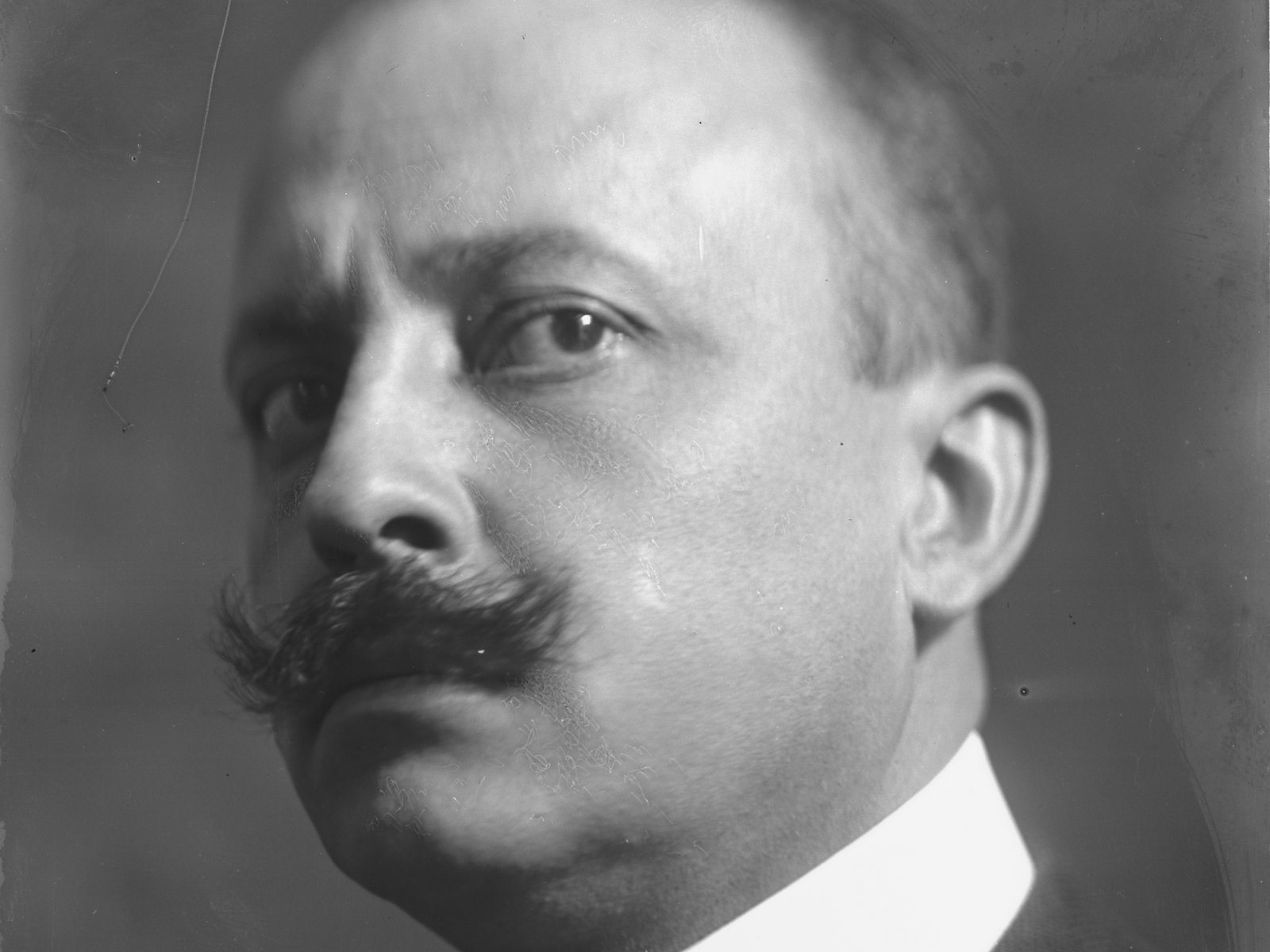
Un ritratto di studio, firmato da Emilio Sommariva, il fotografo a cui si rivolge la Milano elegante. L'uomo che chiede di distruggere musei e biblioteche si fa ritrarre come un signore della buona borghesia. Non è una contraddizione: è parte del personaggio.
Marinetti nasce nel 1876 ad Alessandria d'Egitto, in una famiglia agiata. Studia in un collegio francese, si forma tra Alessandria e Parigi, esordisce come poeta in lingua francese. Quando fonda il Futurismo non è un giovane sconosciuto: dirige già una rivista, «Poesia», pubblicata a Milano dal 1905, e ha una rete di contatti letterari in Italia e in Francia.
Soprattutto, ha i mezzi per sostenere ciò che annuncia. Il patrimonio familiare paga la stampa dei manifesti, le edizioni, i viaggi, le spedizioni delle opere. Il Futurismo nasce anche così: un'avanguardia che non deve aspettare editori né mecenati, perché il suo fondatore è insieme autore, editore e finanziatore.
Il suo talento principale è forse quello di tenere insieme persone diverse. Pittori, poeti, musicisti, architetti trovano in lui un organizzatore instancabile, capace di trasformare le idee altrui in manifesti, le riunioni in serate, i gruppi in un movimento. È passato alla storia come «la caffeina dell'Europa»: chi accelera, sollecita, non lascia tregua.
È anche un comunicatore di sorprendente modernità. Cura la propria immagine con la stessa attenzione dei manifesti: ritratti, interviste, conferenze, polemiche calcolate. Il personaggio pubblico è una delle sue opere più riuscite.
La sua storia non si ferma qui. Negli anni successivi il suo percorso si intreccia con la guerra e con la politica, e la timeline di questa sala lo segue fino al 1944, anno della sua morte. Questo ritratto lo coglie nel momento in cui il Futurismo è ancora, soprattutto, un'impresa artistica.
English
A studio portrait by Emilio Sommariva, the photographer of elegant Milan. The man who calls for the destruction of museums and libraries has himself portrayed as a gentleman of the upper middle class. This is no contradiction: it is part of the character.
Marinetti is born in 1876 in Alexandria, Egypt, into a wealthy family. He studies at a French school, is educated between Alexandria and Paris, and makes his debut as a poet writing in French. When he founds Futurism he is no unknown young man: he already runs a magazine, Poesia, published in Milan since 1905, and has a network of literary contacts in Italy and France.
Above all, he has the means to support what he announces. The family fortune pays for printing the manifestos, the editions, the travels, the shipping of the works. This is also how Futurism is born: an avant-garde that need not wait for publishers or patrons, because its founder is author, publisher and financier at once.
His greatest talent is perhaps holding different people together. Painters, poets, musicians, architects find in him a tireless organiser, able to turn other people's ideas into manifestos, meetings into evenings, groups into a movement. He has gone down in history as "the caffeine of Europe": the one who accelerates, prods, gives no respite.
He is also a strikingly modern communicator. He shapes his own image with the same care as his manifestos: portraits, interviews, lectures, calculated controversies. His public persona is one of his most accomplished works.
His story does not end here. In the following years his path becomes entangled with war and politics, and the timeline in this room follows him up to 1944, the year of his death. This portrait catches him at the moment when Futurism is still, above all, an artistic enterprise.