
Velocità, parola, visione · Villa Casati Stampa
Radunare
Manifesto dei pittori futuristi, Milano, 11 febbraio 1910 · Manifesto of the Futurist Painters, Milan, 11 February 1910
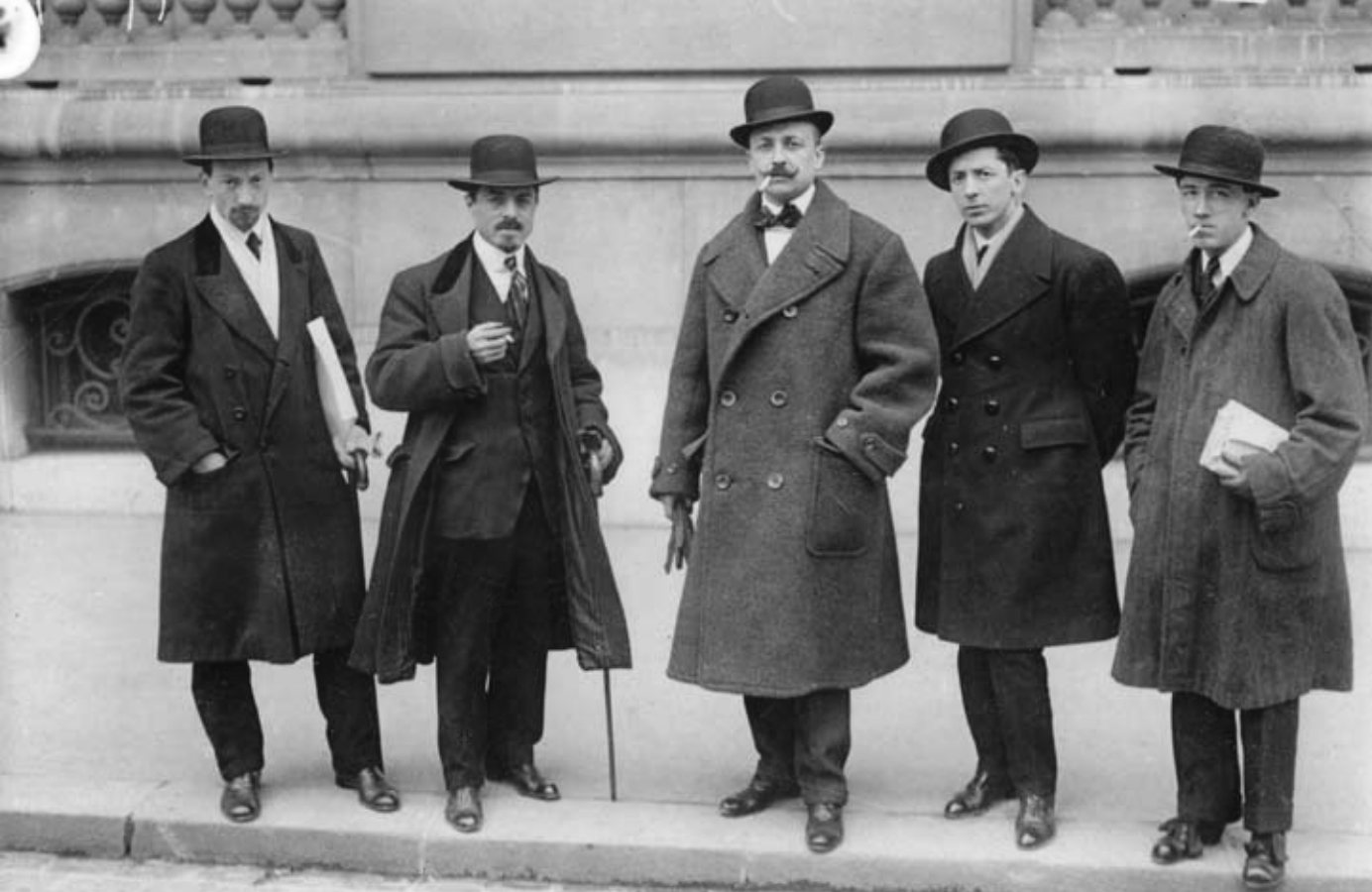
Cinque nomi in fondo a un foglio: Umberto Boccioni, Carlo Carrà, Luigi Russolo, Giacomo Balla, Gino Severini. Un anno dopo il manifesto di Marinetti, il Futurismo smette di essere la voce di un solo autore e diventa una firma collettiva.
Il foglio è un volantino, stampato per essere distribuito e spedito, non per essere conservato. Si rivolge «ai giovani artisti d'Italia» e ha il tono di un appello più che di un trattato: contro il culto del passato, contro i musei, contro una critica che giudica l'arte nuova con i criteri di quella antica.
Le firme raccontano un gruppo meno compatto di quanto sembri. Boccioni, Carrà e Russolo lavorano a Milano, vicino a Marinetti. Balla, il più anziano, vive a Roma: anni prima era stato il maestro di Boccioni e di Severini, quando i due, poco più che ventenni, frequentavano il suo studio. Severini abita a Parigi dal 1906. L'elenco tiene insieme città, generazioni e percorsi diversi.
Nemmeno i nomi sono quelli di partenza. Tra i primi aderenti figuravano anche Aroldo Bonzagni e Romolo Romani, che si ritirano presto; Balla e Severini entrano al loro posto. Un movimento, fin dall'inizio, è anche una questione di chi resta.
C'è poi un dettaglio che dice molto del metodo futurista: i pittori si dichiarano futuristi prima di avere quadri futuristi. Il manifesto tecnico, che prova a spiegare come dipingere il movimento e la luce, arriva due mesi dopo, l'11 aprile. Le opere verranno più tardi ancora. Prima si annuncia, poi si costruisce.
Marinetti trova ciò che gli mancava: artisti capaci di dare forma visiva alle sue parole. Gli artisti trovano un organizzatore, una rivista, una rete di contatti. Da questo foglio in poi il Futurismo è un nome al plurale. Boccioni lo ritroverete nella sala successiva, Balla più avanti nel percorso.
English
Five names at the foot of a sheet: Umberto Boccioni, Carlo Carrà, Luigi Russolo, Giacomo Balla, Gino Severini. A year after Marinetti's manifesto, Futurism stops being the voice of a single author and becomes a collective signature.
The sheet is a leaflet, printed to be handed out and posted, not to be kept. It addresses "the young artists of Italy" and reads more like an appeal than a treatise: against the cult of the past, against museums, against critics who judge new art by the standards of the old.
The signatures tell of a group less united than it seems. Boccioni, Carrà and Russolo work in Milan, close to Marinetti. Balla, the eldest, lives in Rome: years earlier he had been the teacher of Boccioni and Severini, when the two, barely in their twenties, frequented his studio. Severini has lived in Paris since 1906. The list holds together different cities, generations and paths.
Nor are these the original names. Among the first to join were also Aroldo Bonzagni and Romolo Romani, who soon withdrew; Balla and Severini took their place. From the very beginning, a movement is also a matter of who stays.
One detail says a great deal about the Futurist method: the painters declare themselves Futurists before they have any Futurist paintings. The technical manifesto, which tries to explain how to paint movement and light, follows two months later, on 11 April. The works will come later still. First you announce, then you build.
Marinetti finds what he lacked: artists able to give visual form to his words. The artists find an organiser, a magazine, a network of contacts. From this sheet onwards, Futurism is a plural name. You will meet Boccioni in the next room, and Balla further along the route. Your collection is already set up for you with fields and content. Add your own, or import content from a CSV file. Add fields for any type of content you want to display, such as rich text, images, videos and more. You can also collect and store information from your site visitors using input elements like custom forms and fields.
Be sure to click Sync after making changes in a collection, so visitors can see your newest content on your live site. Preview your site to check that all your elements are displaying content from the right collection fields.