
Exhibitions / Experience

Leonardo racconta il Cenacolo.Attraverso gli occhi di Leonardo.Leonardo and the Last Supper

A work that cannot travel becomes an experience visitors can enter, guided by Leonardo's voice and perspective.

Amalart's role · Concept and development, experience design, content production and delivery at both venues.

The project
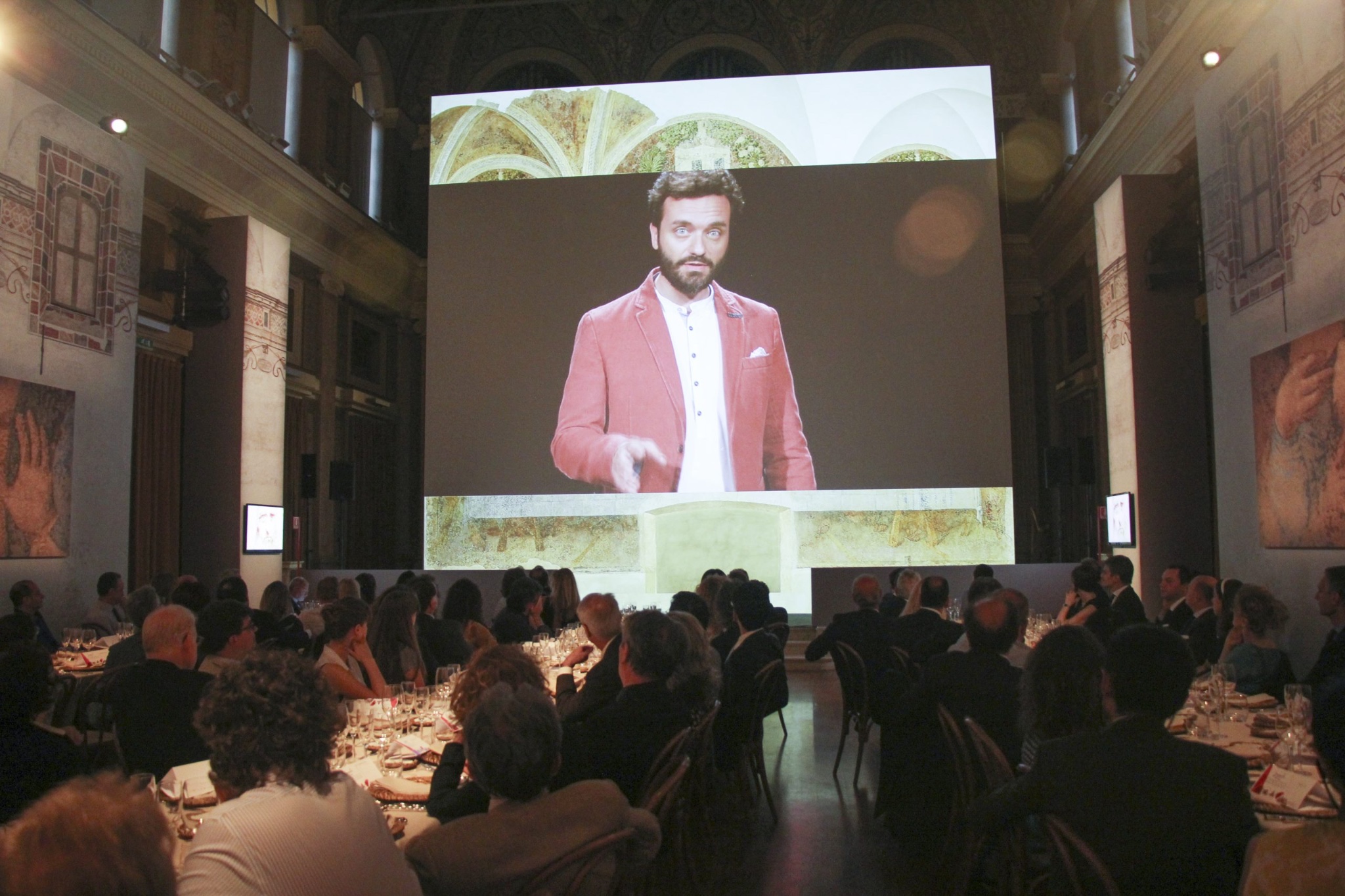
The character of Leonardo narrates The Last Supper on a large screen before an audience
Leonardo introduces visitors to The Last Supper. Sala Barozzi, Milan, 2015. Photograph supplied by Amalart.
The curatorial choice

Before explaining The Last Supper, consider it through the eyes of the artist who imagined it.

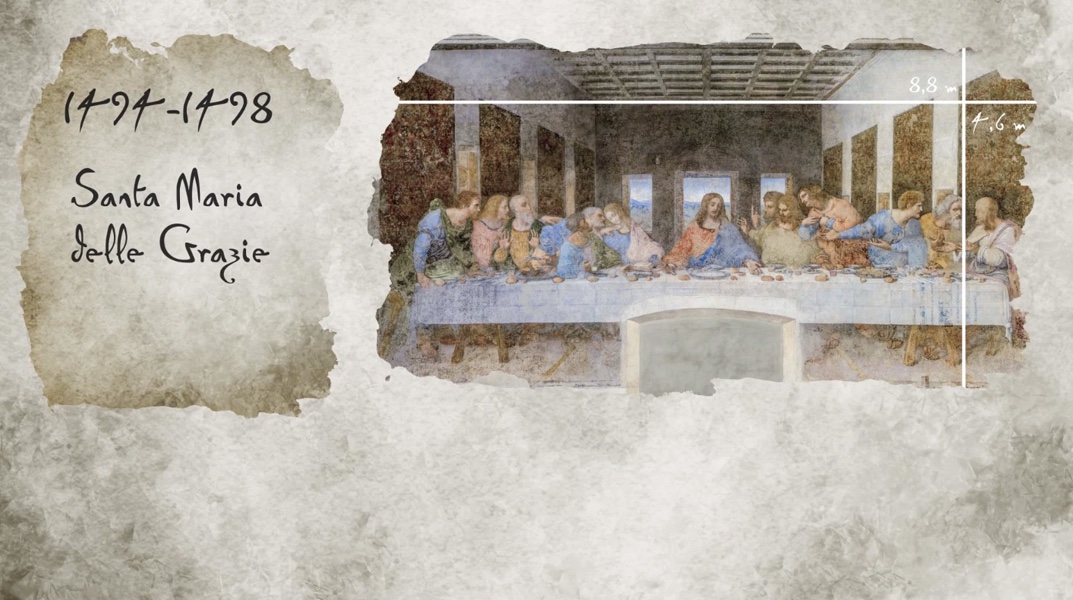
The Last Supper with its original dimensions marked
The Last Supper is shown at its original scale and in relation to the refectory for which it was painted. Still from the multimedia project.
01 / STARTING POINT

A work that cannot travel.

The Last Supper is inseparable from the wall in the refectory of Santa Maria delle Grazie. Its fragility limits access. In 2015, as Milan welcomed Expo's international visitors, the project offered a way to engage with the work for those unable to see it in its original setting. The experience was clearly distinguished from a visit to the painting.
02 / DESIGN CHOICE

Leonardo tells his own story.

Explanation gives way to a first-person narrative. Leonardo guides visitors through the composition, observing the apostles' gestures and expressions and describing his technique and creative process. Available in eight languages, the film establishes a direct relationship with different audiences.

03 / EXPERIENCE

Reconstructing the relationship between work and place.

High-definition projection presents The Last Supper at full scale, in the colours revealed by restoration. Giovanni Donato Montorfano's Crucifixion appears on the opposite wall, as in the refectory of Santa Maria delle Grazie. Image, voice, sound and space restore the relationship for which the work was conceived.

Curatorial perspective

Looking as a narrative method.

For Leonardo, the eye is a means of understanding: to observe is to measure, comprehend and imagine. The project uses this idea to shape its narrative. Visitors follow how Leonardo constructs and questions what he sees, rather than watching a sequence of images.

THE VOICE

The first person.

Leonardo becomes the narrator, connecting his thinking to the choices within the work.

THE GESTURES

A moment that spreads.

Christ's words travel across the table like a movement. Hands, glances and postures reveal the figures' reactions and the dramatic construction of the scene.

THE PLACE

The painting returns to the refectory.

The dimensions, arrangement of the walls and presence of the table recall that The Last Supper was created for a place of shared meals. The reconstruction makes the relationship between work, architecture and function understandable, without replacing the original.

THE ENCOUNTER

Sharing the table.

The programme extends to dinners, music and gatherings. Shared meals draw on the refectory's original function, turning the narrative into a shared experience.

1:1The scale of the reproduction of The Last Supper
8Languages available for the film about the work
2Milan venues for the project in 2015
Two venues

From the city to Expo.

The same idea took different forms in the two settings. In Via Vivaio, it was an exhibition open to the city. At Expo, it welcomed international visitors, schools and pavilion representatives, also becoming a place for building relationships.

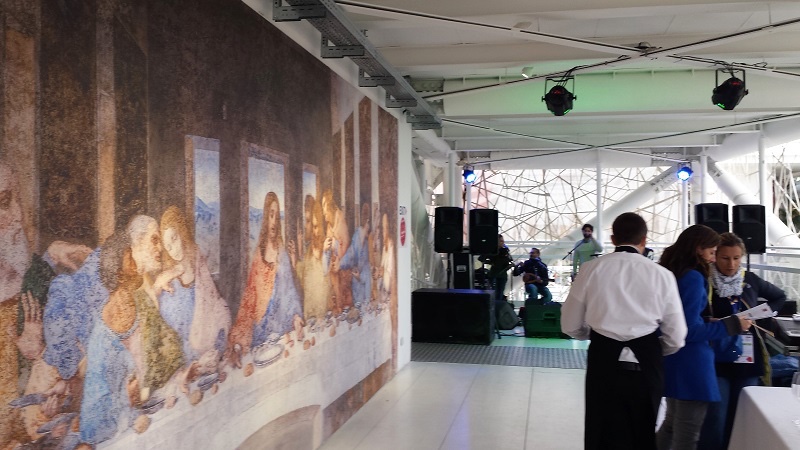
Reproduction of The Last Supper in the Alessandro Rosso Group space at Expo Milano 2015
The Last Supper in the multimedia space of the Alessandro Rosso Group Pavilion, Expo Milano 2015.
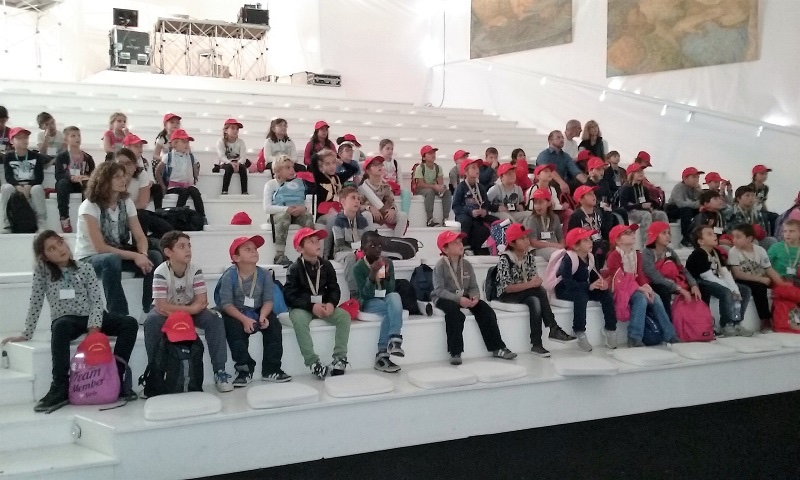
A group of children watching the project on The Last Supper at Expo Milano 2015
Young visitors during an activity at Expo.

Sala Barozzi.

At the Istituto dei Ciechi di Milano, the project reconstructed the refectory and hosted the multimedia experience, gatherings and shared meals for local audiences and Expo visitors.

Expo Milano 2015.

In the Alessandro Rosso Group space, the reproduction, film and educational activities brought the narrative into the World Expo. Dinners with pavilion directors gave the project an international and institutional dimension.

The development

From one work to a museum.

In 2015, Leonardo's perspective guided audiences through a single work. In the following years, Amalart developed the same approach to explore his life, works, machines and the relationship between art and science.

This research is now taking permanent form at the Leonardo da Vinci Museum, Sanya, currently under development. The museum expands the experience for a new cultural context.

MILAN · 2015Leonardo racconta il Cenacolo
SANYA · UNDER DEVELOPMENTLeonardo da Vinci Museum, Sanya
Explore the project in Sanya

The work and the collaborations

Amalart
Concept and development, experience design, content production and delivery at both venues.
Partnership
Le Mappe dei Tesori d’Italia.
Venues in 2015
Sala Barozzi, Istituto dei Ciechi di Milano; multimedia space of the Alessandro Rosso Group Pavilion, Expo Milano 2015.
Visual materials
Photographs and film stills supplied by Amalart.

Heritage seen through new eyes.

A work, an artist or a subject to develop into an experience. Our first conversation explores the narrative and form that can bring it to a new audience.

Let's talk