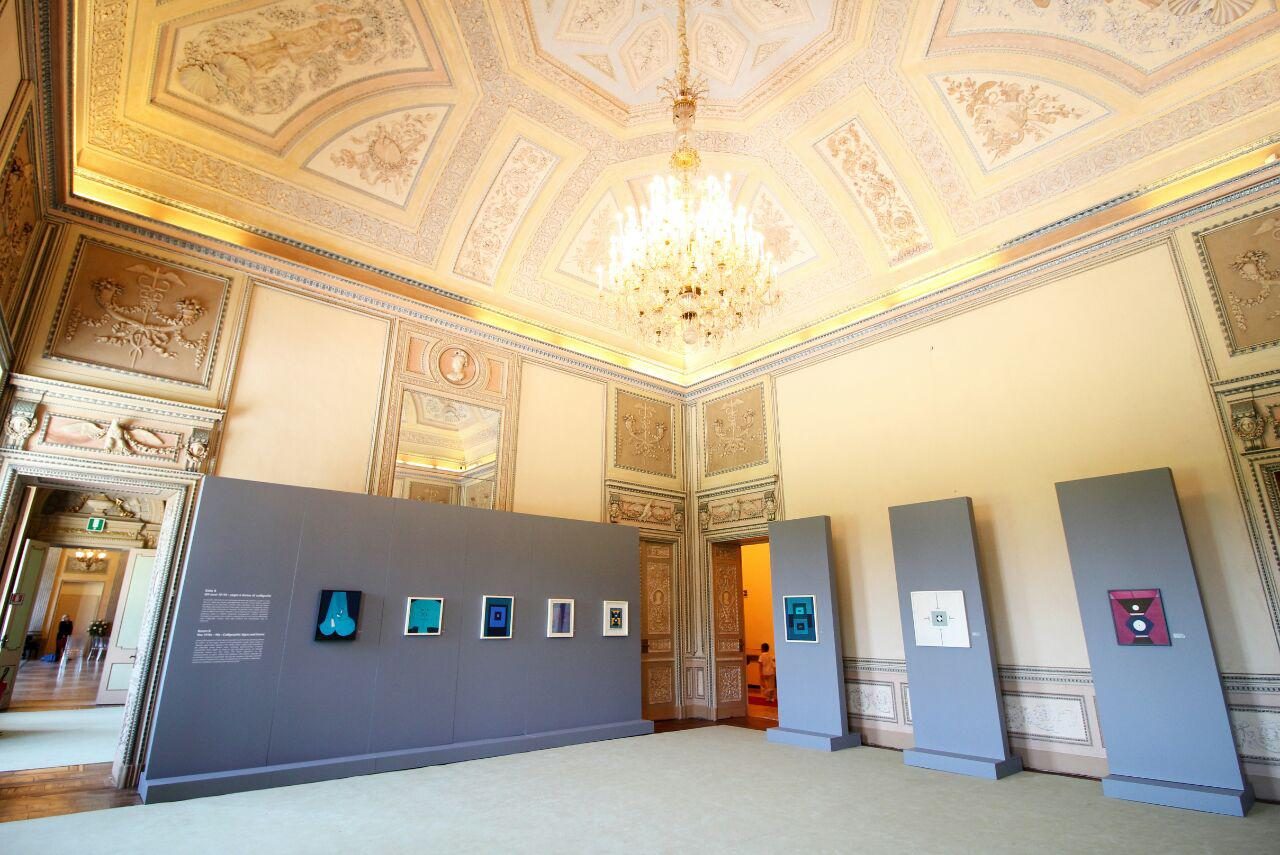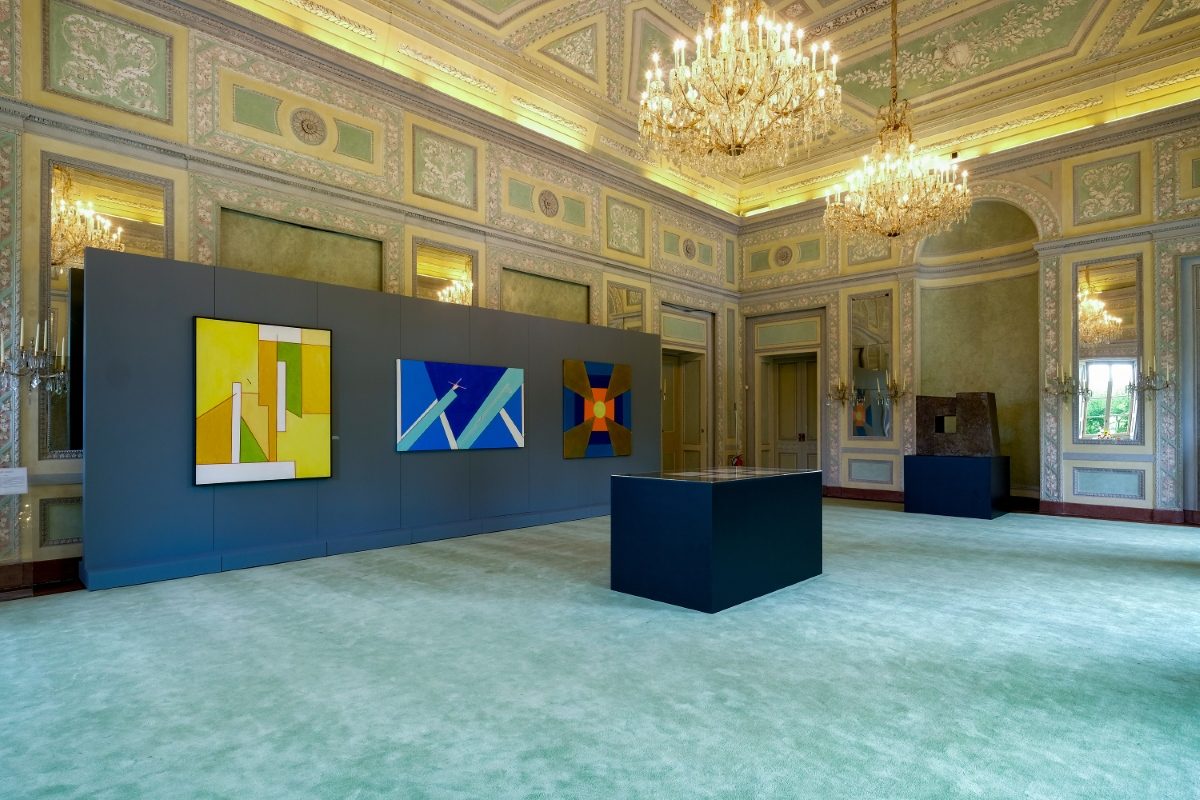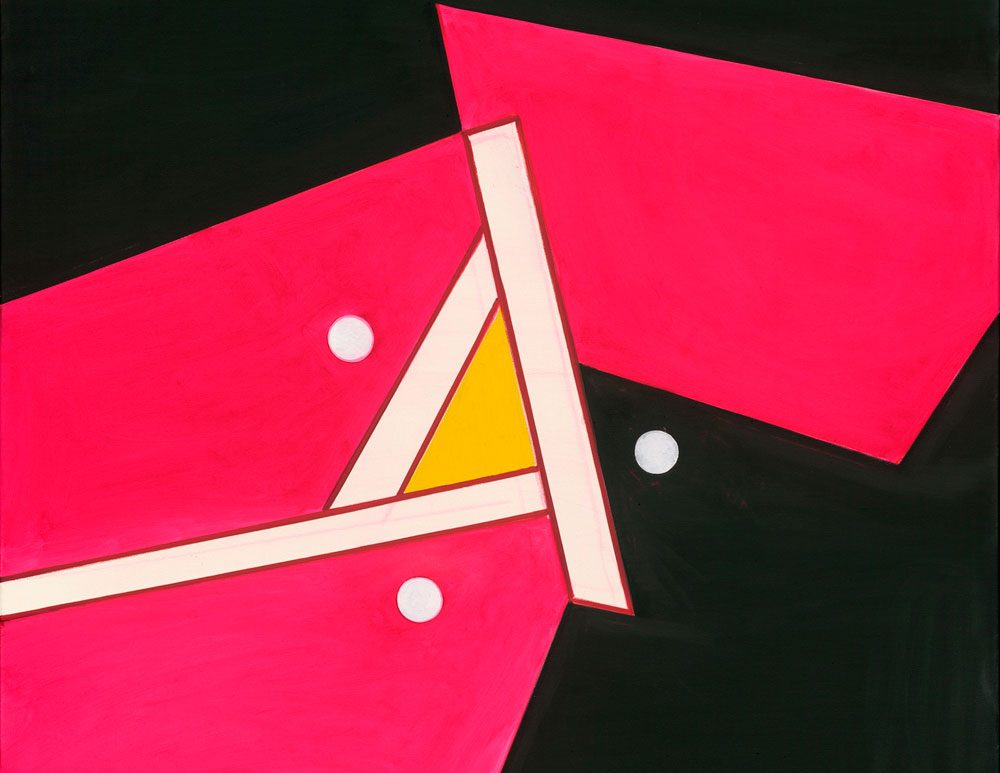
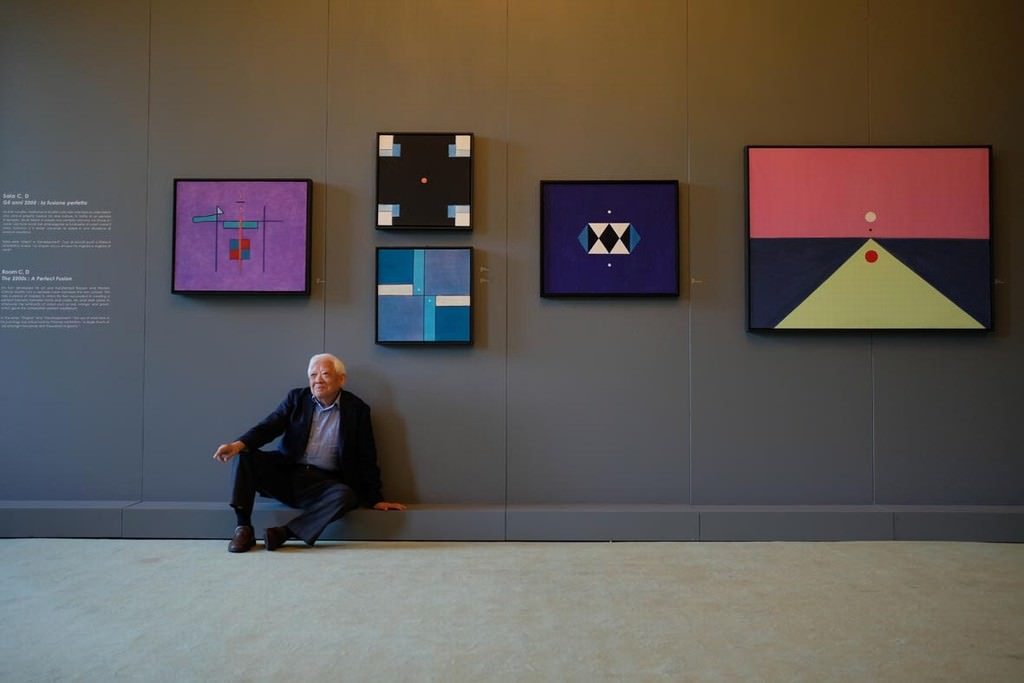
Sixty works trace almost sixty years of Ho Kan's career. He was one of the pioneers of twentieth-century Chinese abstraction. The exhibition opens with drawings made in Taiwan in the 1950s, shown here for the first time, in which a Surrealist influence is still visible. Next comes the period that, from the 1960s onwards, led him to geometric abstraction: points, lines, planes and fields of colour, built on ideas drawn from Eastern philosophy. The exhibition closes with recent paintings and some sculptures made with the sculptor Yang Pei-Chen.
It is the story of an artist who moved between two worlds. Ho Kan came to Europe in 1964 and settled in Milan, where he lived and worked for fifty years. His painting brings together Western geometry and a sensibility rooted in Chinese tradition. This is also why he played a part in the renewal of twentieth-century Chinese painting.
Amalart supported the organisers with the communication and promotion of the exhibition in China. A retrospective of a pioneer of Chinese abstraction, held in an Italian royal residence, was a story that also concerned the public in his country of origin. The task was to make sure it reached them.
A year later, at the Villa Reale: Pahsi Li, Gilding Monologue →