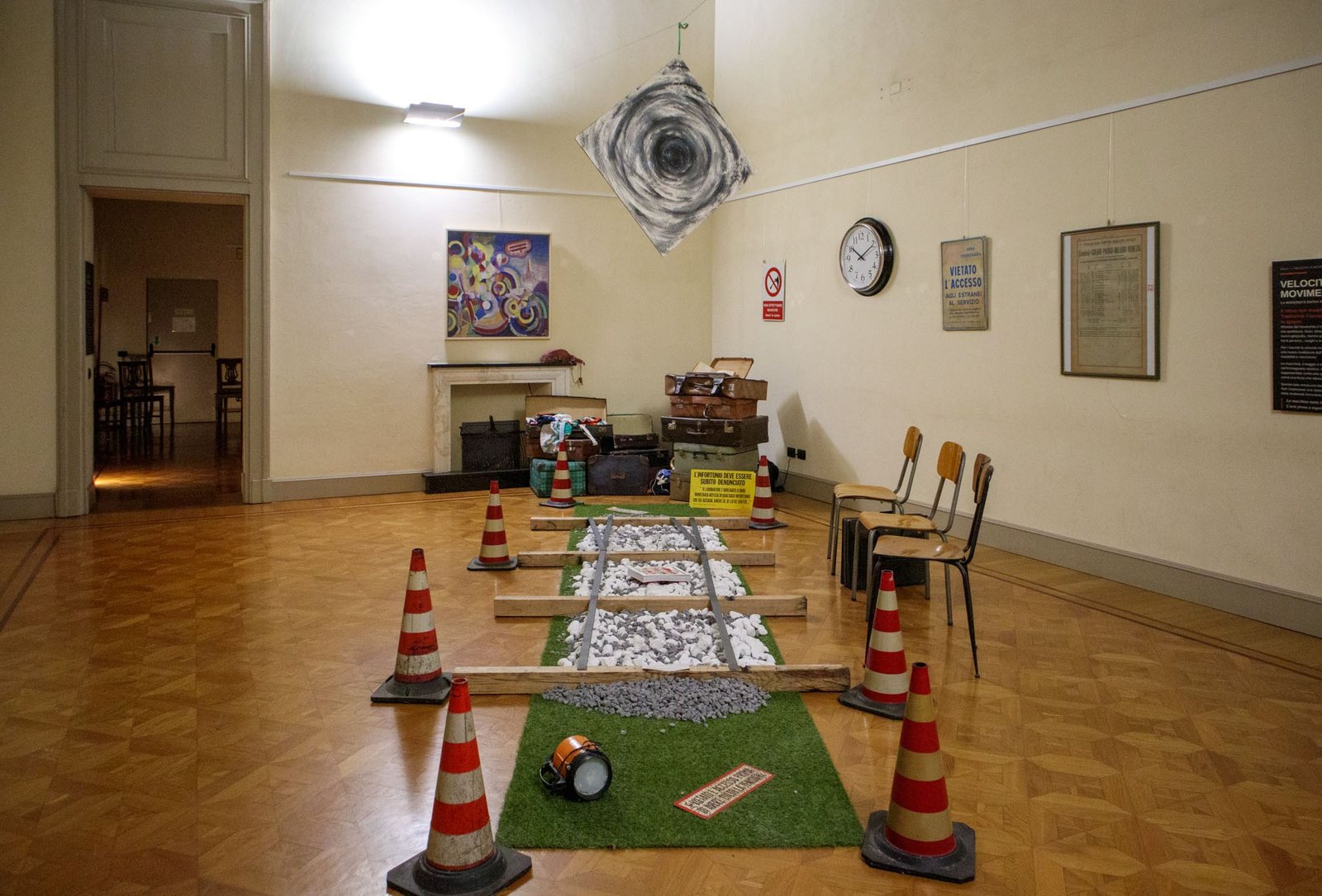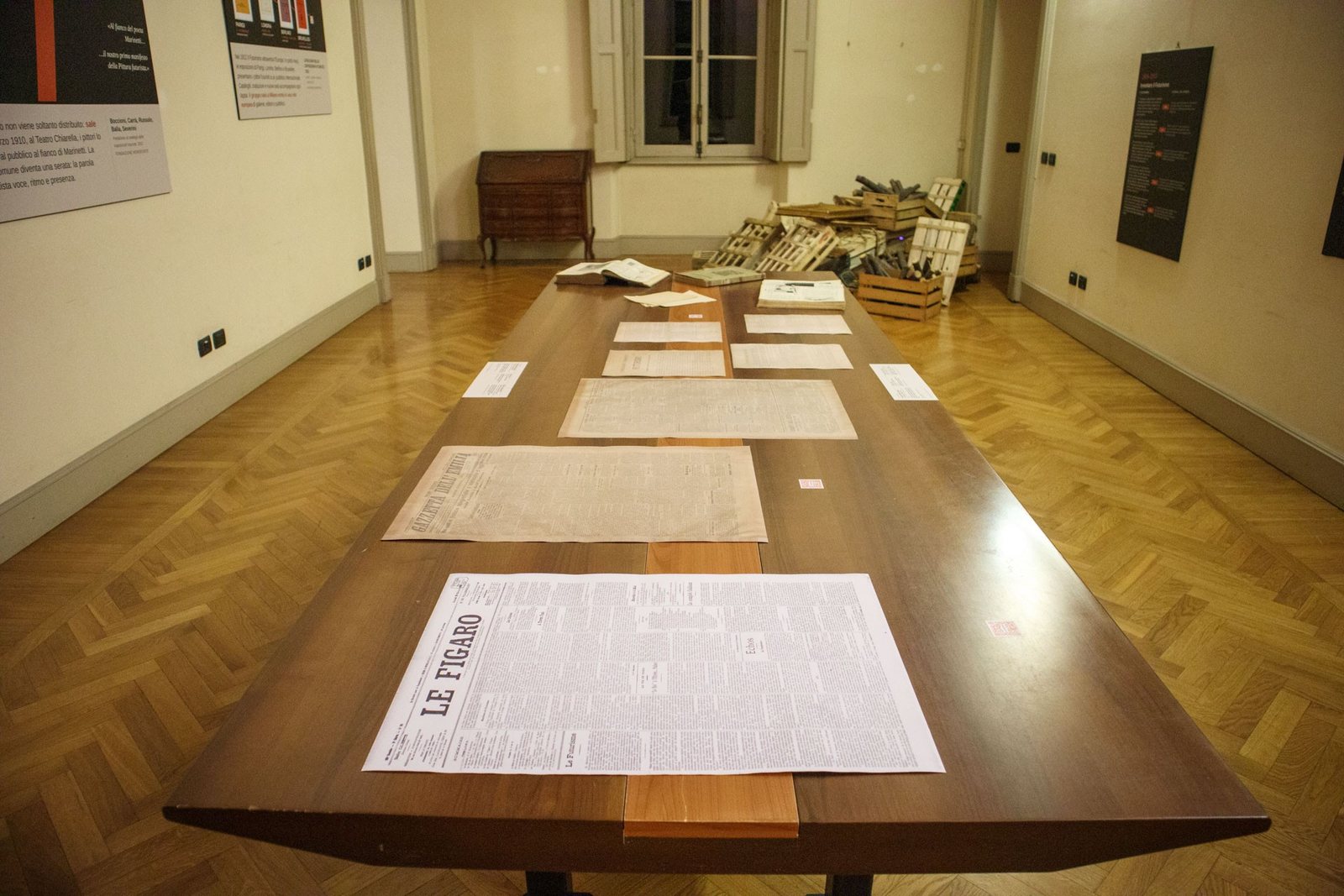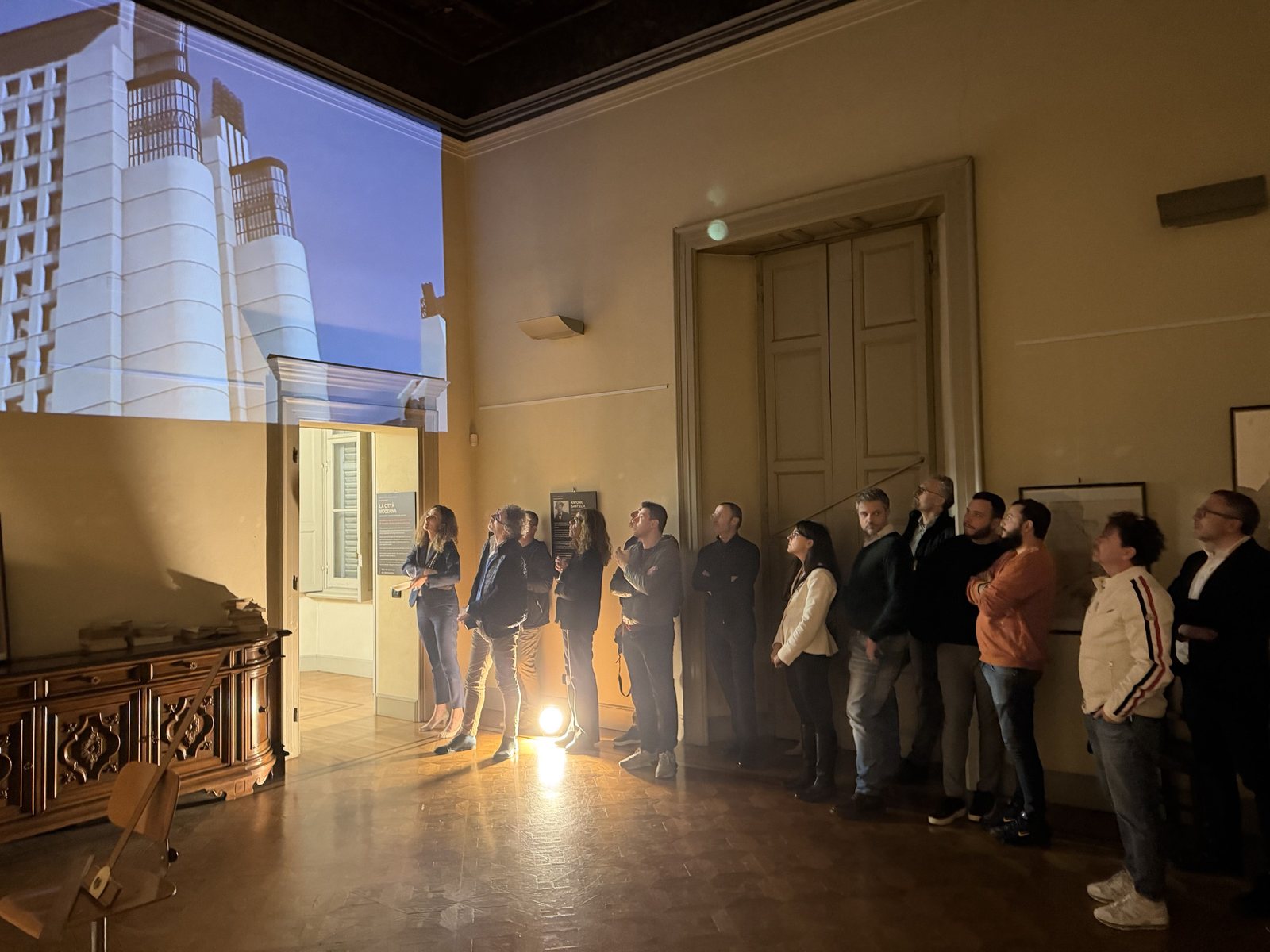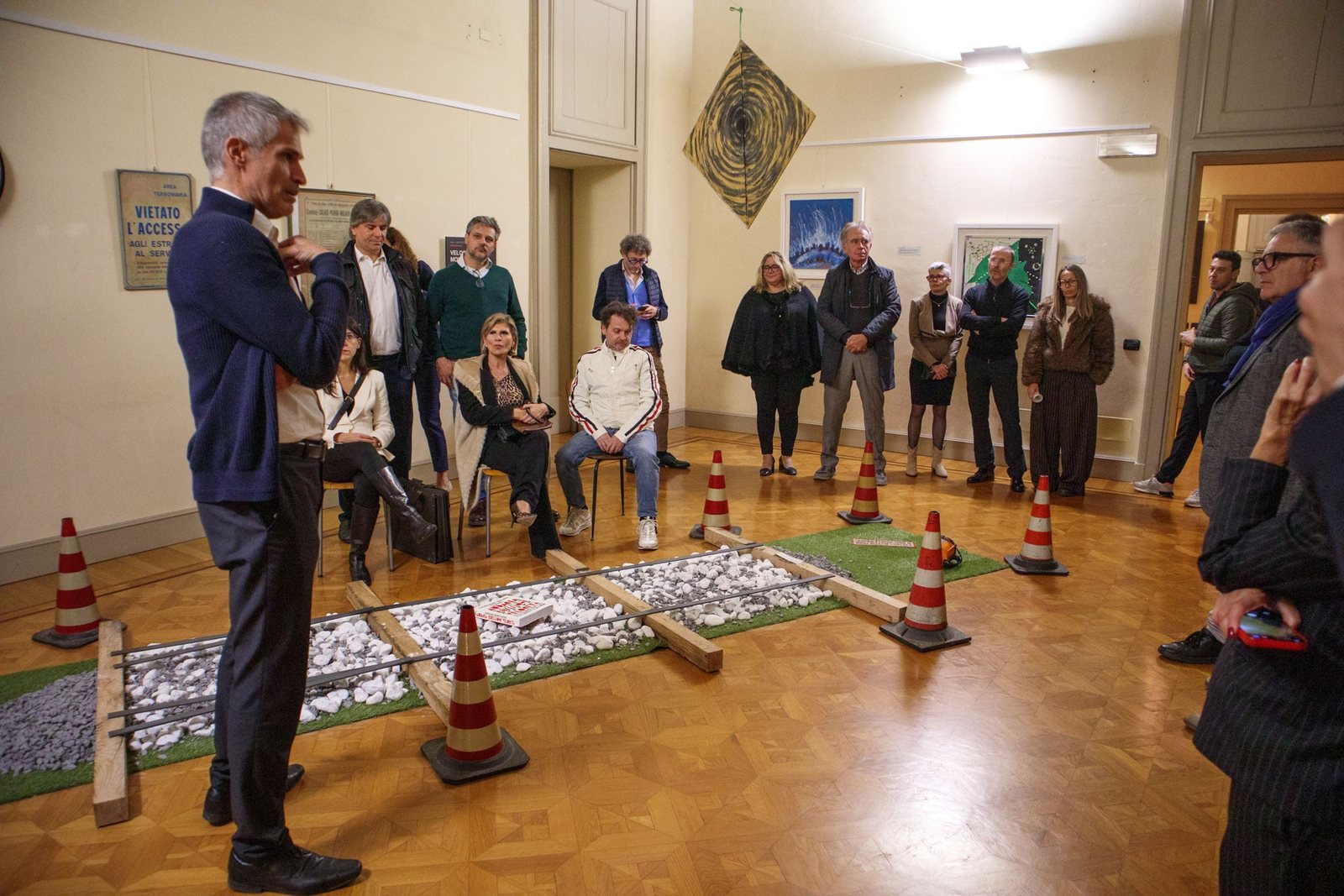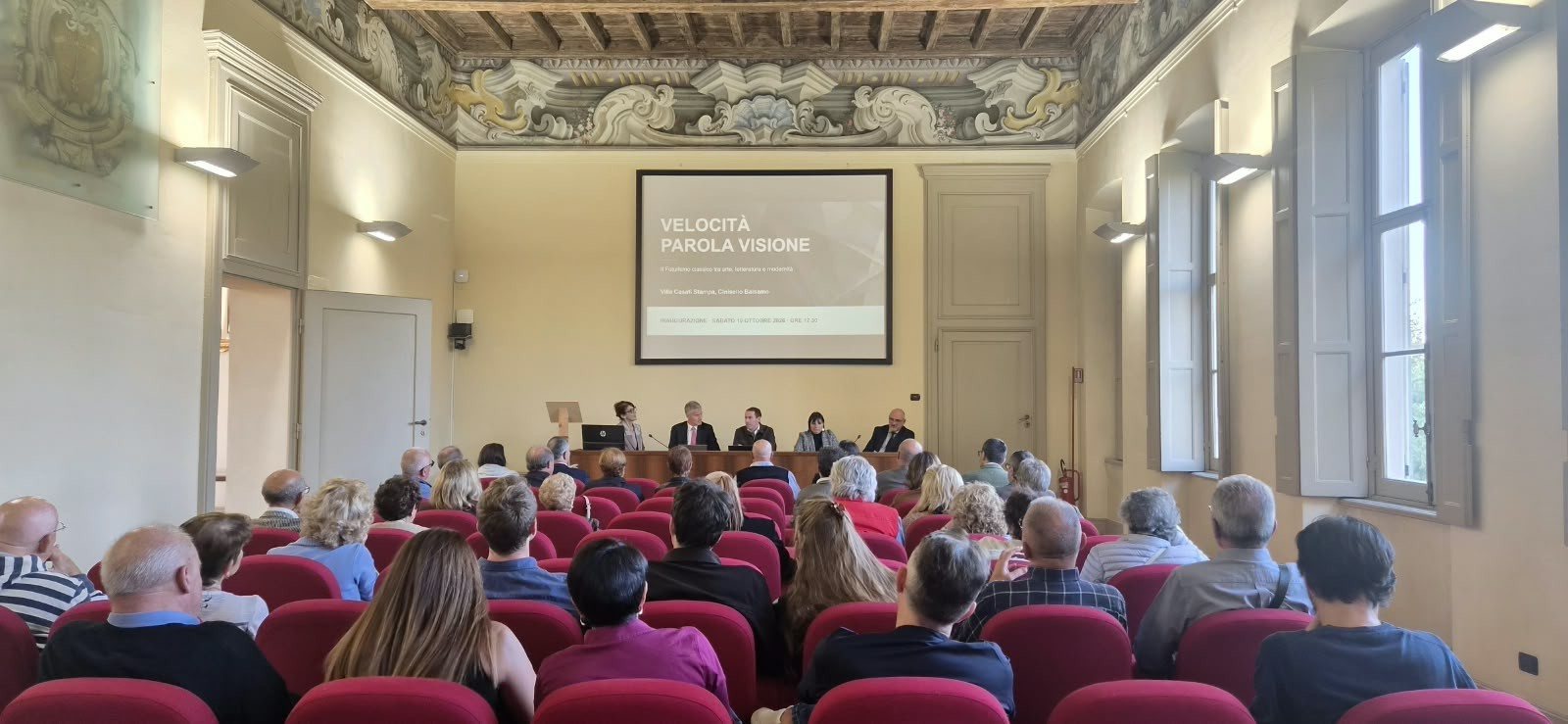
On 20 February 1909 Le Figaro printed Marinetti's Manifesto on its front page. From there Futurism moved beyond painting into literature, architecture, typography, theatre and advertising. The exhibition followed that shift across five rooms at Villa Casati Stampa, with the aim of letting visitors experience the movement rather than simply look at it.
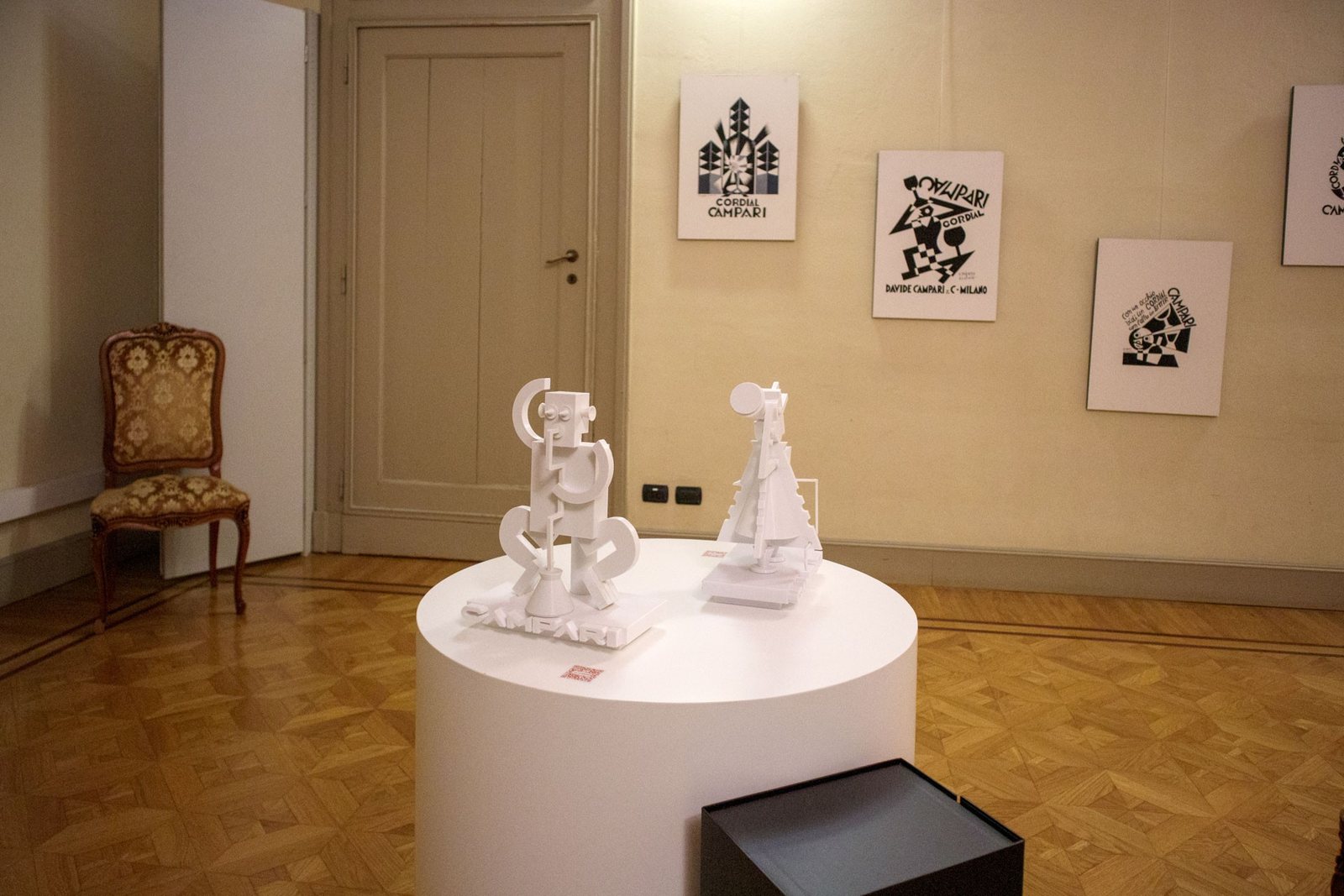
The route began with a railway track to be walked, accompanied by Marinetti's words, and continued with Boccioni's dynamism, the modern city imagined by Sant'Elia and Balla's studies of light. Thanks to the collaboration with Galleria Campari, the last room was devoted to Fortunato Depero and Davide Campari, and to the way art became part of building a product's identity.
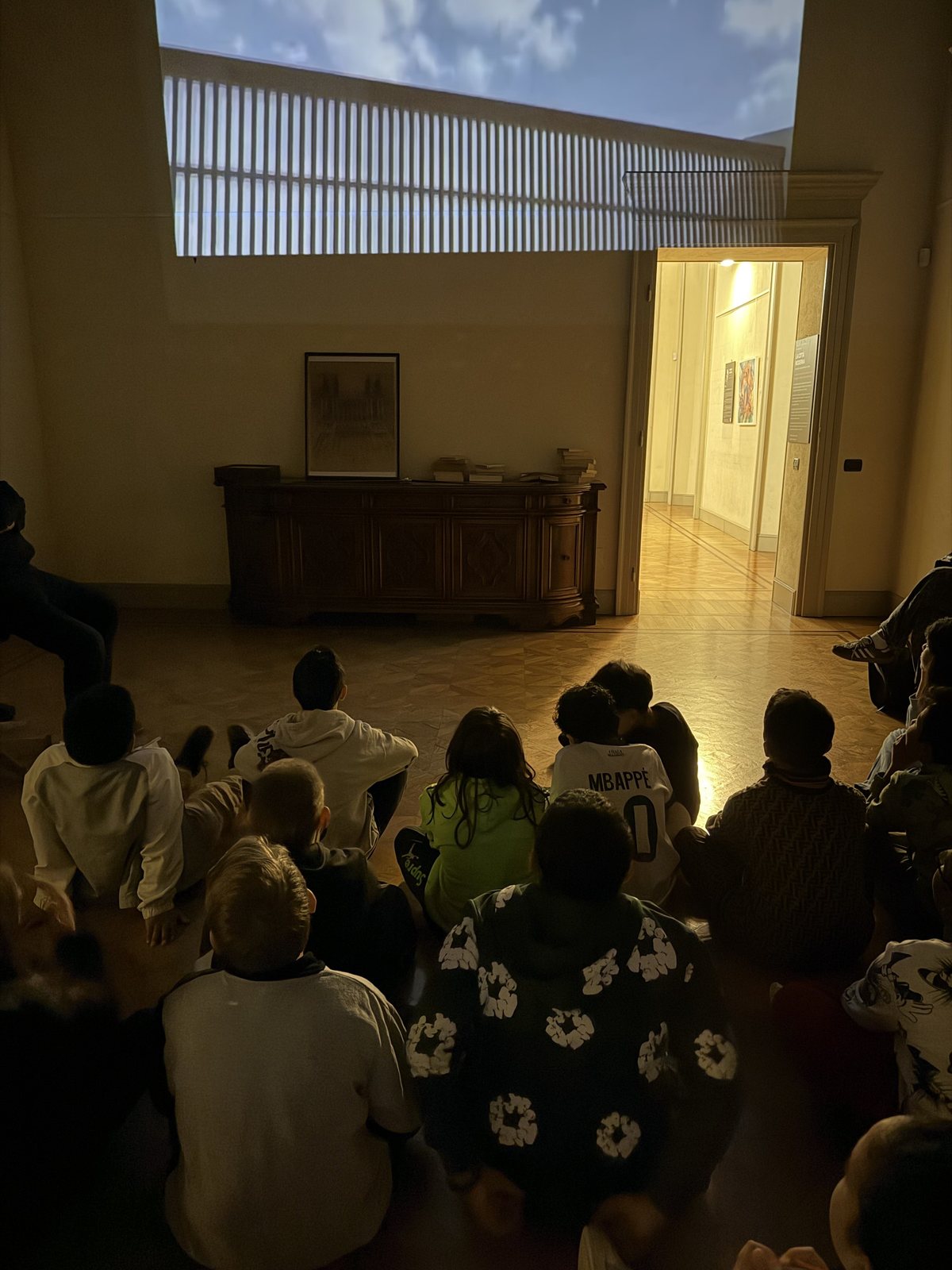
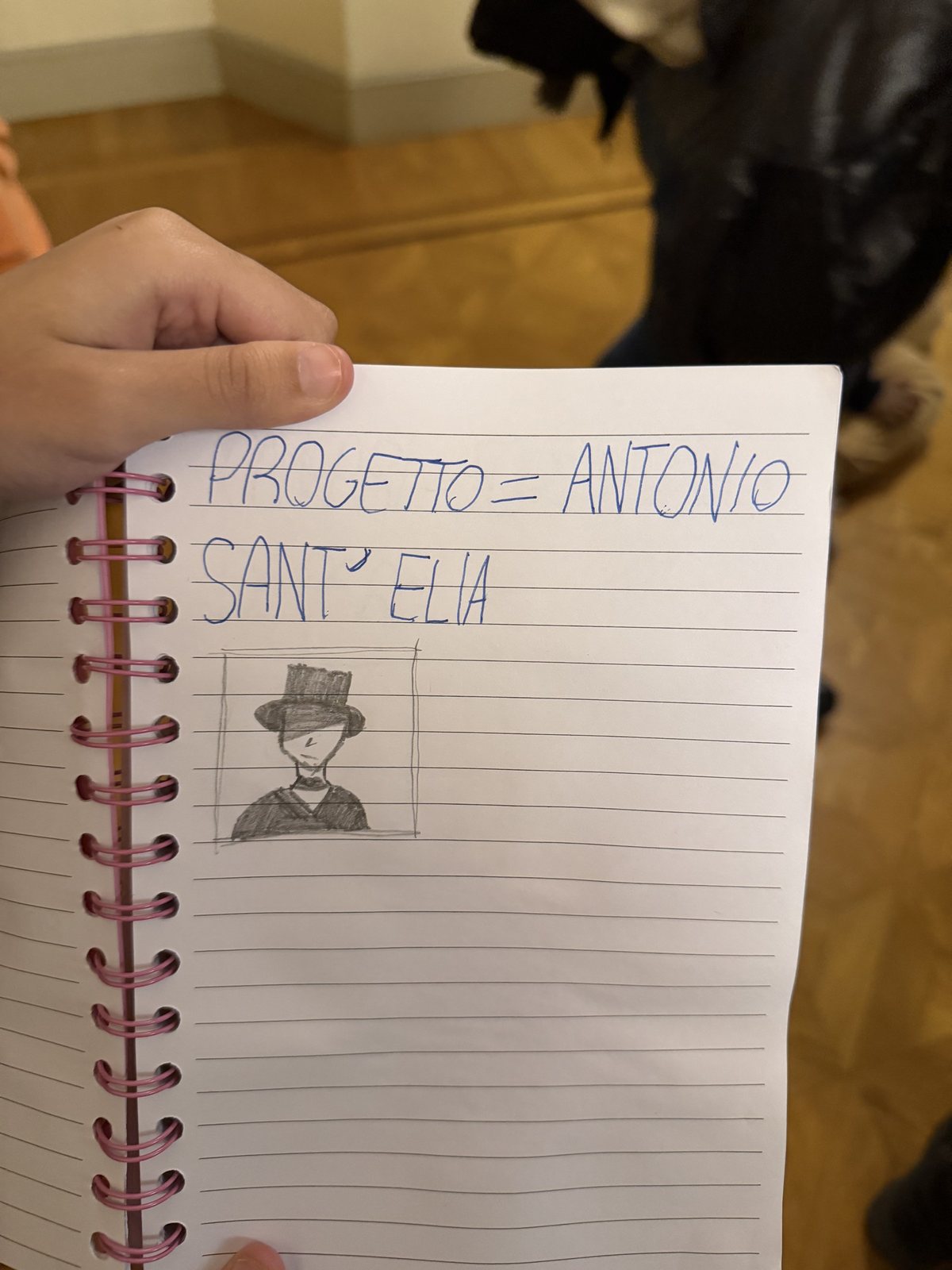
As with the previous exhibitions at Villa Casati Stampa, the project had a social purpose: part of every ticket went to City Angels Italia, through TrustMeUp. During the opening weeks the exhibition also welcomed local schools, with sessions in which pupils drew Futurism in the rooms themselves.
Amalart conceived and organised the exhibition in collaboration with Ophis, curated the route and the exhibition design, from the railway track to the Campari room, and handled its communication, from the launch teasers to the closing film.
The previous exhibition at Villa Casati Stampa: Modigliani, i volti della modernità →